



Published on : 01/27/2026
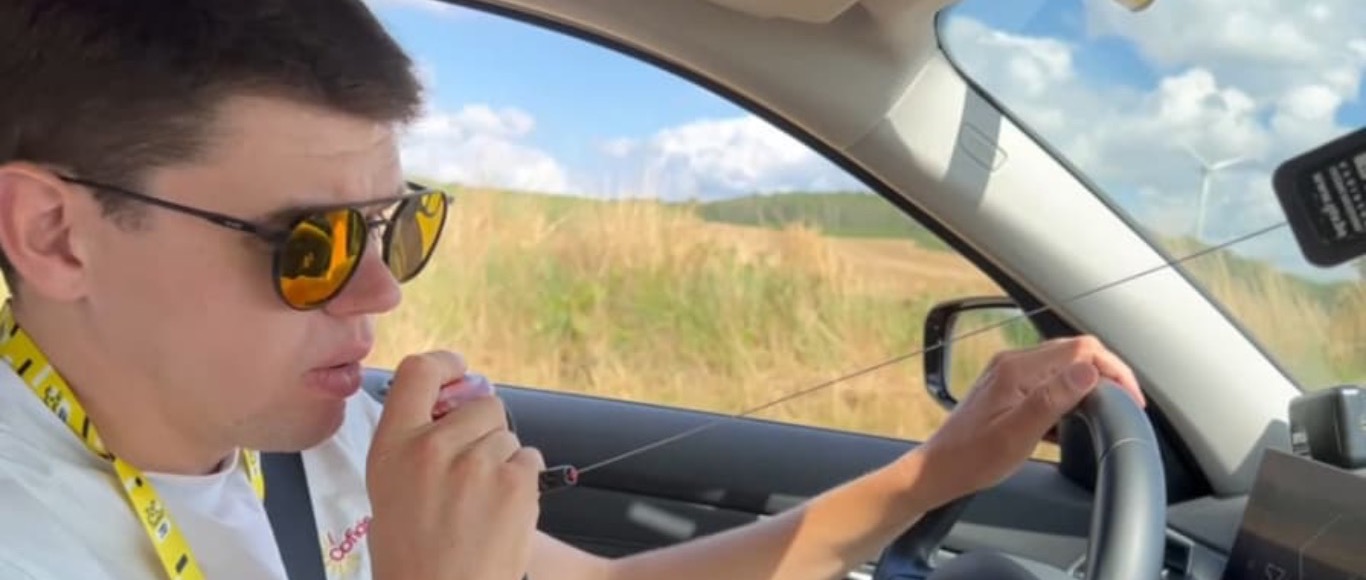
At lunchtime, the Cofidis team takes a moment to chat with the people who make up the team. With “A l'abri du vent” (Sheltered from the wind), we put the race aside for a few minutes to listen and take some time out. Today, let's meet Arthur Quilliec.
How do you manage a women's team at the highest level ?
I joined the Cofidis women's team in 2022, as soon as it was created. Before that, I had already spent several years working in women's cycling, notably with the Brittany committee's National Division team, where I worked for three years.
Before that, I coached the U19 and U17 categories, also for the Brittany committee, alongside my first job where I was in charge of mountain biking. At that time, I also worked a lot with the younger riders, the U15 and U13s, who were then known as the minimes-cadettes.
Between 2015 and 2017, we launched a number of projects for these young girls. When I see some of these riders competing at the highest level today, such as Cédrine Kerbaol and Maëva Squiban, I tell myself that all that hard work has paid off. You don't win straight away, but you win in the long term. I have almost always worked with women, in all categories. I started coaching quite naturally, in my club, without any specific career goals. My guiding principle has remained the same: to support, structure, and help people grow. It's no coincidence that I find myself here today.
Did you ever imagine becoming a sports director?
No, not at all.
What I did before was mainly analysis, a lot of work on equipment, positioning, simulations. That's still very important to me today.
I don't train the athletes directly, but I train the team. Making sure that everything works, that every detail is optimized, is essential. Being a sports director isn't about doing one thing, it's about being able to do many things.
What does being a sports director actually involve?
We are a bit like orchestra conductors. Our role is to ensure that everything works in harmony: logistics, strategy, people. During races, we organize briefings and manage relations with the runners before, during, and after the event.
But the role goes far beyond the race itself. A training camp, for example, has a different dynamic. Everything has to run smoothly so that the athletes can focus solely on their performance. It's essential to understand each profession and each constraint.
How do you manage 15 different personalities?
There are three of us sports directors for the women's team. Each of us follows a group of five riders on a daily basis. This creates a more regular, more human connection.
No two athletes function in the same way. Sometimes you have to push them. Sometimes you have to listen. Sometimes you just have to be there. It's a question of empathy and understanding.
If everything always went smoothly, it wouldn't be normal. Tensions are part of the job. The important thing is that, in the end, things move in the right direction.
When the results are good, everything is simple. When they're not, that's when our role really comes into its own. We have to identify what's wrong, ask the right questions, and work with the coaches and other directors.
Sometimes it's quick to fix. Sometimes it takes six months to understand. The longer you stay in a downward spiral, the harder it is to reverse it.
What happens when a runner doesn't feel well on the morning of a race?
It depends. Sometimes it's just a bad feeling when you wake up. Sometimes it's deeper than that: it could be fatigue, illness, a build-up of little things... The start of a race is almost always complicated. It takes time to get going.
Our role is to distinguish between what is temporary and what is structural. We can't control everything, but we try to eliminate as many uncontrollable factors as possible. They're not machines.
What is your role during the race?
During the race, we're in the car. We provide assistance, refuel, and reassure. We communicate a lot by radio: about hazards on the road, the route, turns, climbs, tactics to adopt, etc.
We use what we saw during reconnaissance, what we see on television, and what the riders tell us. The strategy is constantly evolving. Sometimes it's a big decision to make. Sometimes it's just a detail to adjust.
Was there a defining moment?
Yes. Victoire Berteau's French championship title remains a very memorable moment. There are also more difficult moments, related to falls and injuries. That's part of the job. You just have to live with it.
What the public doesn't see?
Many people think it's a job you do for the love of it, that it's almost easy. It's true that it's a huge opportunity, but it's still a job. There are contracts, pressure, lots of traveling...
Preparing for a race takes several days, even several months of work. Team compositions, schedules, plans A, B, C... everything has to be thought out and anticipated well before the big day.
Why continue despite the constraints?
Because nothing is ever the same. The races change, the people change, the issues are constantly evolving. This variety is what drives me.
It's also a unique way of life. I'm away about 140 days a year. For some members of the staff, it's even more. It's not always easy to make those around you understand.
It's neither better nor worse than any other lifestyle. It's a lifestyle choice. It's my choice.